Clinical-stage targeted therapy
A non-toxic, clinical-stage approach for solid tumors expressing voltage-gated sodium channels. Available through partner clinics. Eligibility verified case-by-case.
Review the therapyFor patients with stage 3 and stage 4 solid tumor cancers who have run out of standard answers. Clinical-stage targeted therapies, second opinions, and access pathways. United States, Mexico, Australia.
Most patients arrive after the third opinion. The path that fits you depends on tumor type, prior treatment, and how quickly you need to act.
A non-toxic, clinical-stage approach for solid tumors expressing voltage-gated sodium channels. Available through partner clinics. Eligibility verified case-by-case.
Review the therapyA second read on pathology, imaging, and treatment history through an NCI-designated comprehensive cancer center or equivalent. Often changes the plan.
Request a consultationA focused trial search filtered to your tumor type, biomarkers, and geography. Includes early-phase access programs and expanded-access pathways.
Get a trial searchWhat to do, in what order, when conventional treatment stops working.
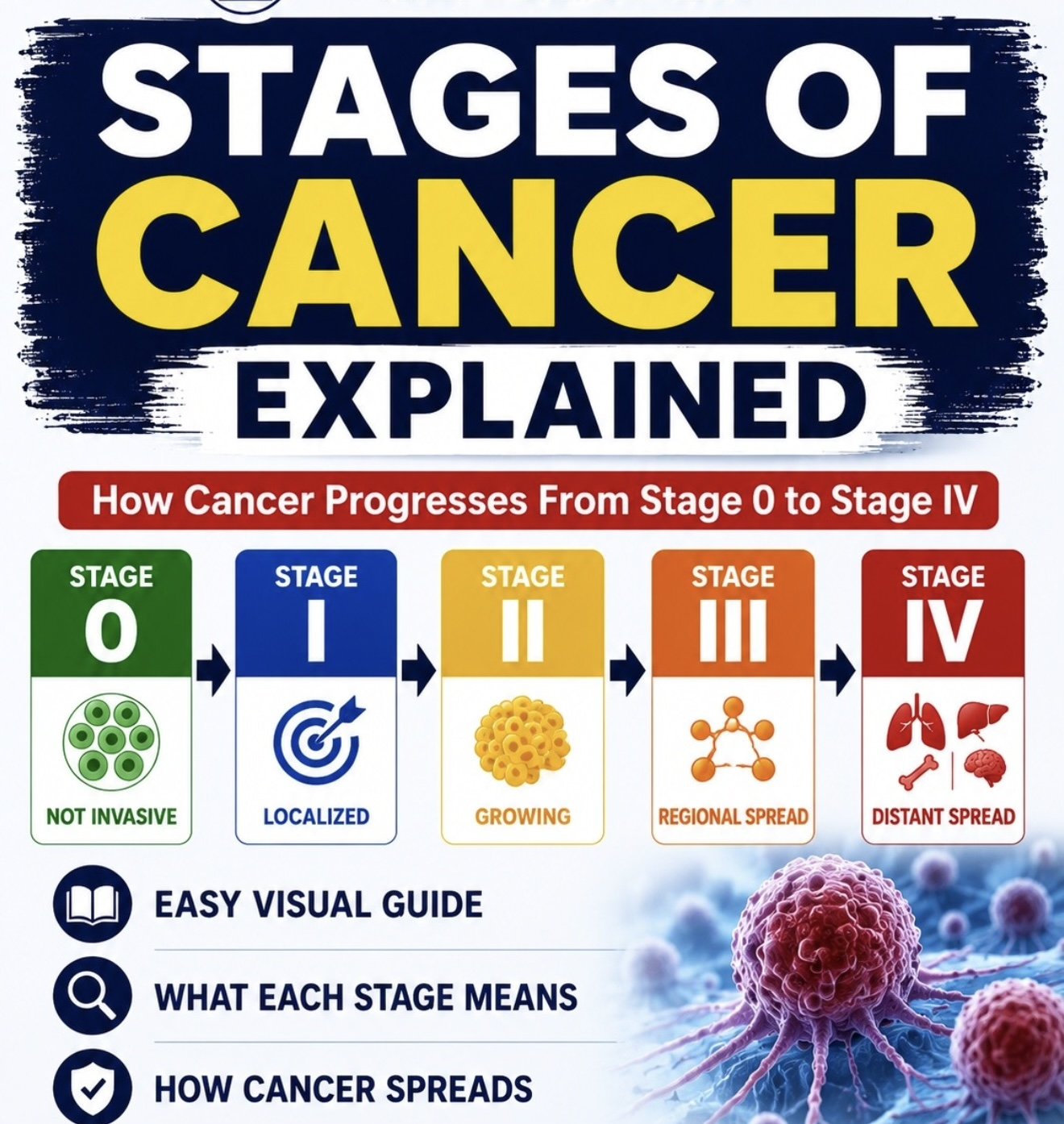
Advanced cancer covers stage 3 and stage 4 disease. Stage 3 disease has spread to regional lymph nodes or nearby tissue. Stage 4 disease has metastasized to distant organs. The treatment plan changes when standard first-line and second-line therapies stop producing durable response.
Most patients reach this point after a sequence of surgery, chemotherapy, radiation, and immunotherapy. The next conversation should center on three questions. What therapies remain that have not been tried. What clinical trials match the tumor profile. What targeted approaches are available outside the standard pathway.
Targeted cancer therapy attacks specific molecular features of cancer cells. The features differ by tumor type. Some tumors over-express a surface receptor. Others over-express an ion channel. Targeted therapy uses that difference to selectively damage cancer cells while sparing normal tissue.
The clinical effect is two-fold. Therapeutic activity stays concentrated on the tumor. The side-effect burden drops compared with traditional cytotoxic chemotherapy. Patients report quality-of-life differences in the first treatment cycle.
Hematologic cancers and bone marrow primary cancers fall outside the scope of solid tumor targeted therapy. Patients in those categories should consult a hematologist-oncologist directly.
Three patient situations should trigger a conversation about non-toxic targeted therapy.
The screening conversation takes about thirty minutes. The clinic reviews pathology, imaging, prior treatment, current performance status, and lab values. Eligibility is confirmed before scheduling.
Partner clinics operate in three jurisdictions today. The choice of jurisdiction depends on regulatory pathway, urgency, and the patient's clinical situation.
Access in the United States runs through clinical trial enrollment, expanded-access programs, and the FDA Right-to-Try framework. Eligibility for expanded access requires documentation of serious or life-threatening disease, no comparable alternative, and a treating physician willing to administer the therapy.
Mexican partner clinics offer faster access for international patients. The regulatory pathway is established and clinics operate under COFEPRIS oversight. Travel logistics are coordinated through the patient navigation team.
Australian clinics access the therapy through the Therapeutic Goods Administration's Special Access Scheme. The pathway is appropriate for stage 3 and stage 4 patients with documented progression on standard therapy.
The first step is the consultation. The intake team requests pathology, recent imaging, and a treatment summary. The medical team reviews the file and confirms whether a targeted approach is clinically appropriate. The next conversation covers the right jurisdiction, the right partner clinic, and a realistic schedule.
No payment is required before clinical eligibility is confirmed.
Partner clinics operate today in the United States, Mexico, and Australia. Additional jurisdictions in evaluation.
Clinical trial, expanded access, Right-to-Try
CORE Medical, Tijuana. COFEPRIS-regulated.
TGA Special Access Scheme
Under evaluation
Investigational research is currently conducted in the United States across three centers under physician leadership.
Independent guides for patients evaluating cross-border medical care in Tijuana, Mexico.
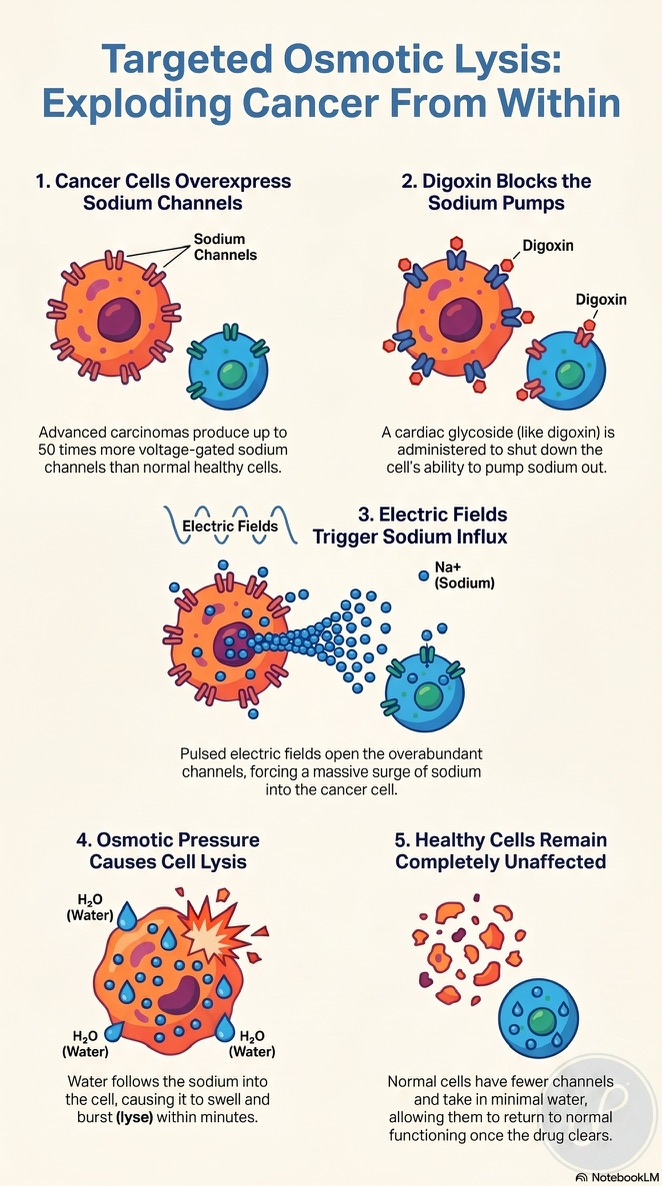
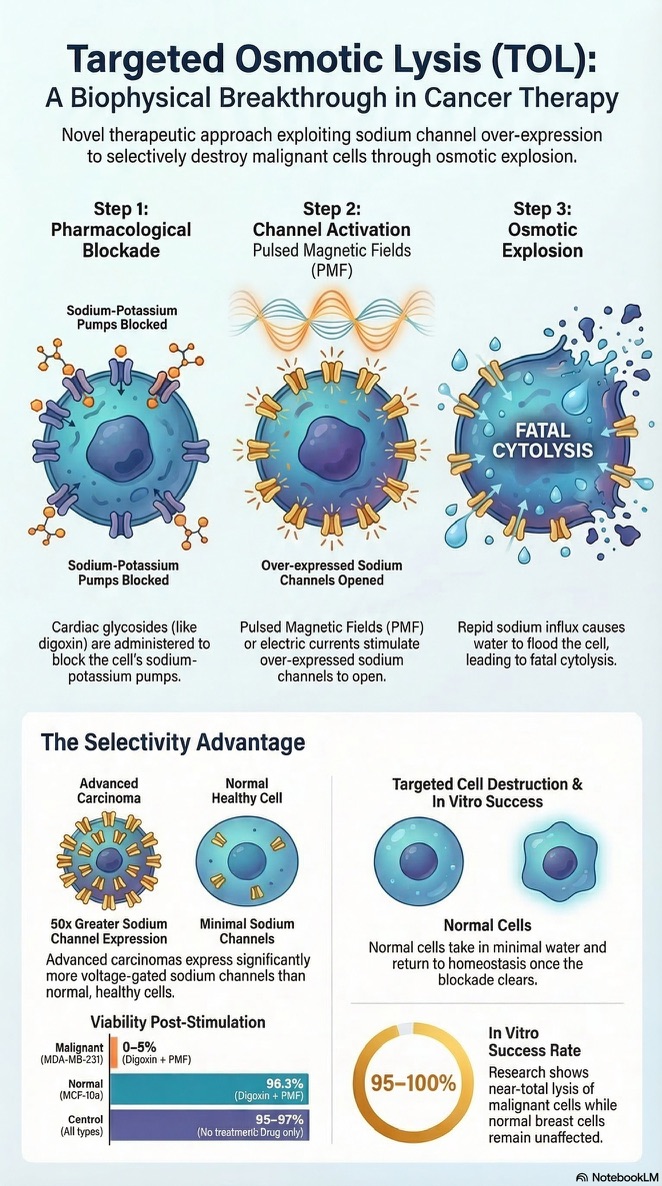
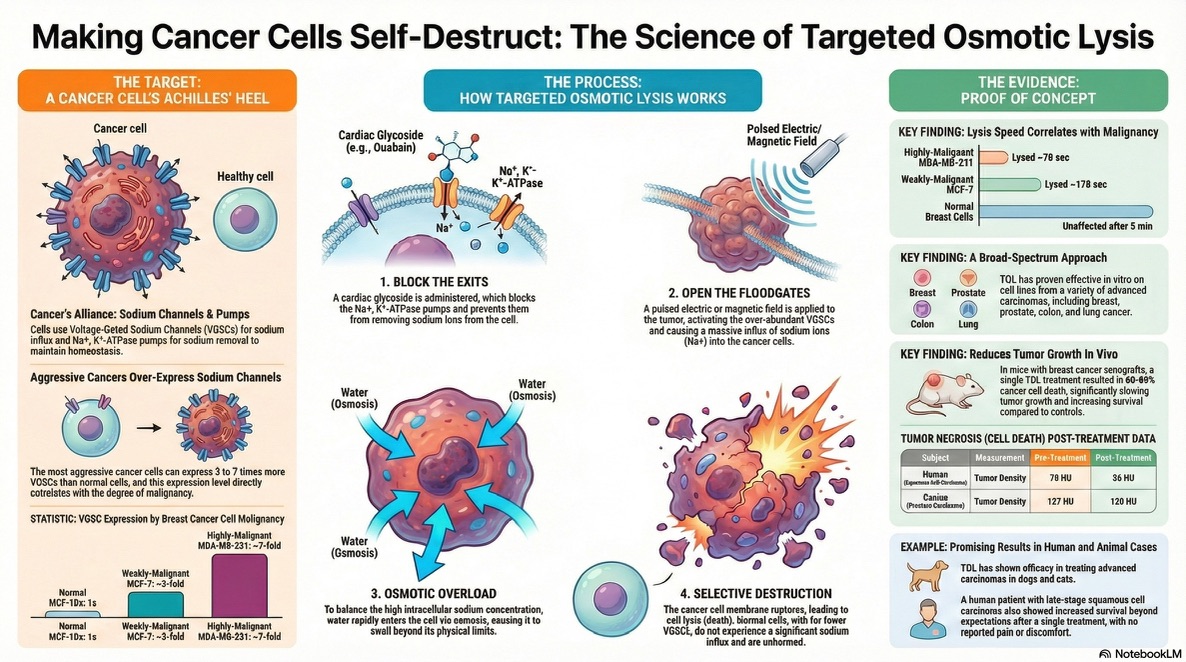
A two-component therapy: a cardiac glycoside drug to block sodium pumps, and a pulsed electric field device to open voltage-gated sodium channels. Cancer cells with 10 to 50 times the channel density of normal cells take in more sodium and water than they can handle, and rupture. Normal cells recover.
Biopsy and assay for voltage-gated sodium channel over-expression. If the patient is a candidate, image the tumor and begin oral dosing of digoxin six days before treatment.
The patient is placed in the Coaxial Ring device. Two hours on the first day, two hours on the second day, with a break halfway through each session. No sedation required.
Post-treatment biopsy and imaging. Compare to baseline. Plan additional courses two to three weeks apart based on response.
First-person accounts from patients who have pursued Targeted Osmotic Lysis. We link to the original sources without editorial revision.
A patient narrative published by the Rise for Lauren foundation documenting one family's journey through TOL evaluation and treatment.
Read the full story →First-person essay from journalist Tiffany Madison documenting her cancer diagnosis and pursuit of Targeted Osmotic Lysis as a treatment path.
Read the essay →Mechanism, evidence, regulatory status, and the partner clinic network for the clinical-stage non-toxic targeted therapy that anchors this network.
The therapy at the center of this network is Targeted Osmotic Lysis (TOL). It is a single mechanism, a documented regulatory pathway, and a named partner facility in Tijuana (CORE Medical). The clinical posture differs from the integrative wellness model that dominates cross-border cancer clinics. The comparison page covers mechanism, eligibility, evidence base, and regulatory posture side by side.
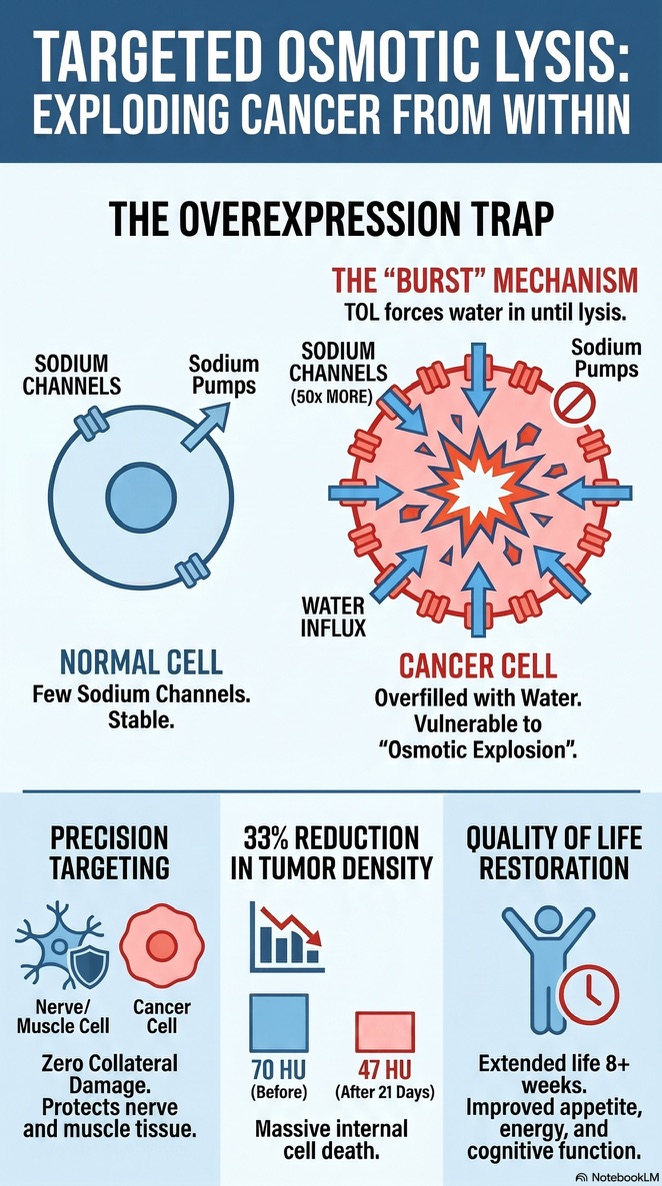
Advanced solid tumors over-express voltage-gated sodium channels at 10 to 50 times normal cell density. TOL exploits that differential to selectively damage cancer cells while sparing healthy tissue.
Normal cells stay stable. Cancer cells, carrying roughly fifty times the sodium channel density, take in water until membrane integrity fails.
The treatment is a five-stage protocol delivered over two consecutive days. Pre-treatment drug loading, two two-hour chamber sessions, and post-treatment imaging.
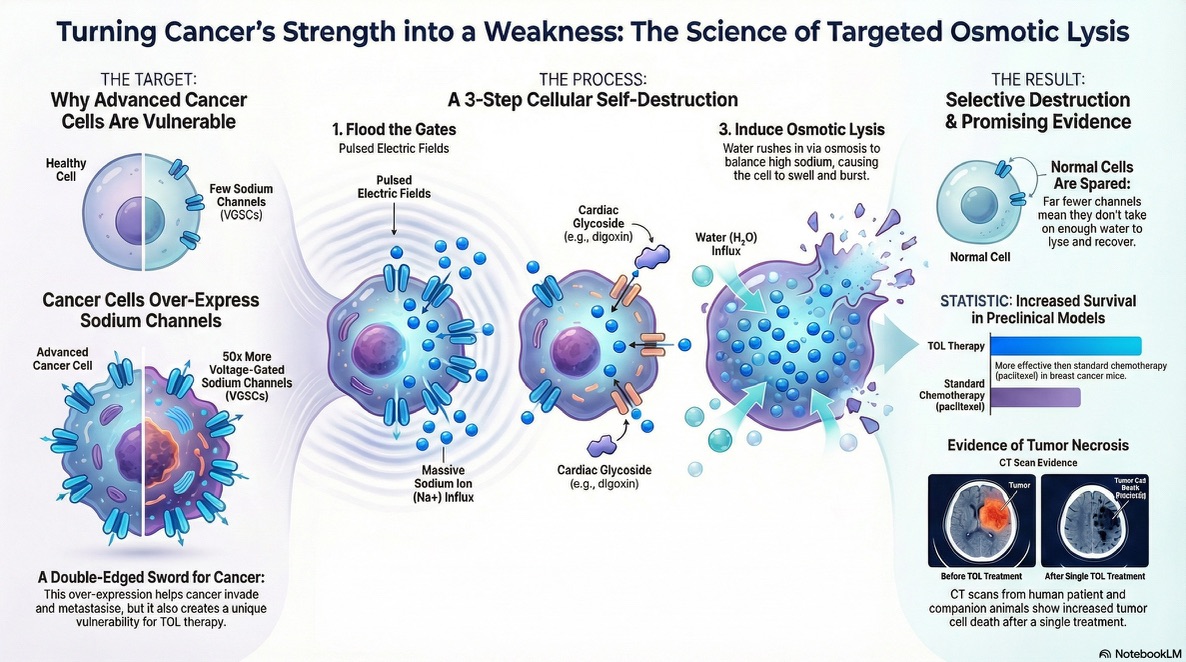
The same VGSC over-expression that drives invasion and metastasis is the structural feature that makes the cell vulnerable. The science overview below covers the target, the three-step process, the selectivity, and the supporting evidence in one frame.
Mechanism papers, preclinical models, human emergency-use case reports, veterinary safety studies, and independent reviews of voltage-gated sodium channel expression in cancer.
Direct answers to the questions that arrive most often through the intake team.
Targeted cancer therapy attacks specific molecular features of cancer cells rather than dividing cells in general. The approach reduces damage to healthy tissue and lowers the side-effect burden that defines traditional chemotherapy and radiation.
Some clinical-stage cancer therapies are available through partner clinics in jurisdictions with established access frameworks for advanced therapies. Eligibility depends on tumor type, stage, prior treatment history, and overall clinical status. The intake team verifies eligibility before scheduling.
Solid tumor cancers expressing voltage-gated sodium channels are candidates for emerging non-toxic targeted therapies. Common candidate tumor types include breast, prostate, colorectal, lung, ovarian, pancreatic, gastric, and melanoma. Hematologic malignancies and bone marrow primary cancers are not candidates for this class of therapy.
Second opinions are available through academic medical centers, NCI-designated comprehensive cancer centers, and patient navigation services. Request your pathology slides, recent imaging, and treatment summary in advance. A second opinion changes the treatment plan in a meaningful number of cases.
The initial consultation and eligibility review do not require payment. The team only discusses cost after clinical eligibility is confirmed and the patient has selected a jurisdiction and partner clinic.
The screening conversation takes about thirty minutes. The clinical file review takes three to five business days. Treatment scheduling depends on the jurisdiction, the partner clinic, and the patient's logistics.
FixCancers.com is the patient-facing education and access hub. FixCancer.org documents the clinical-stage targeted therapy in technical detail. Patients ready for the technical detail should visit FixCancer.org.
Submit the intake. The clinical team reviews pathology, imaging, and treatment history. A clinician responds with a written eligibility assessment.
FixCancers.com is an independent patient resource. The site does not provide medical advice. The information presented here supports informed conversations between patients and their physicians. Eligibility for any therapy is determined by the treating clinical team.
Direct links to every per-cancer mechanism page and patient guide on the site.
High-leverage guides for stage 3 and stage 4 patients.